


Teach
Your textbooks become a structured curriculum: vocabulary, grammar, dialogues, and reading, extracted page by page.
Language Boss
Who are we showing around?
Your choice is remembered. Switch sides anytime.
Language Boss gives schools a textbook-native curriculum engine, AI-generated practice, phoneme-level speaking feedback, and dashboards for every teacher, student, and parent. Built with educators — in real classrooms at Choc Education, Taipei.
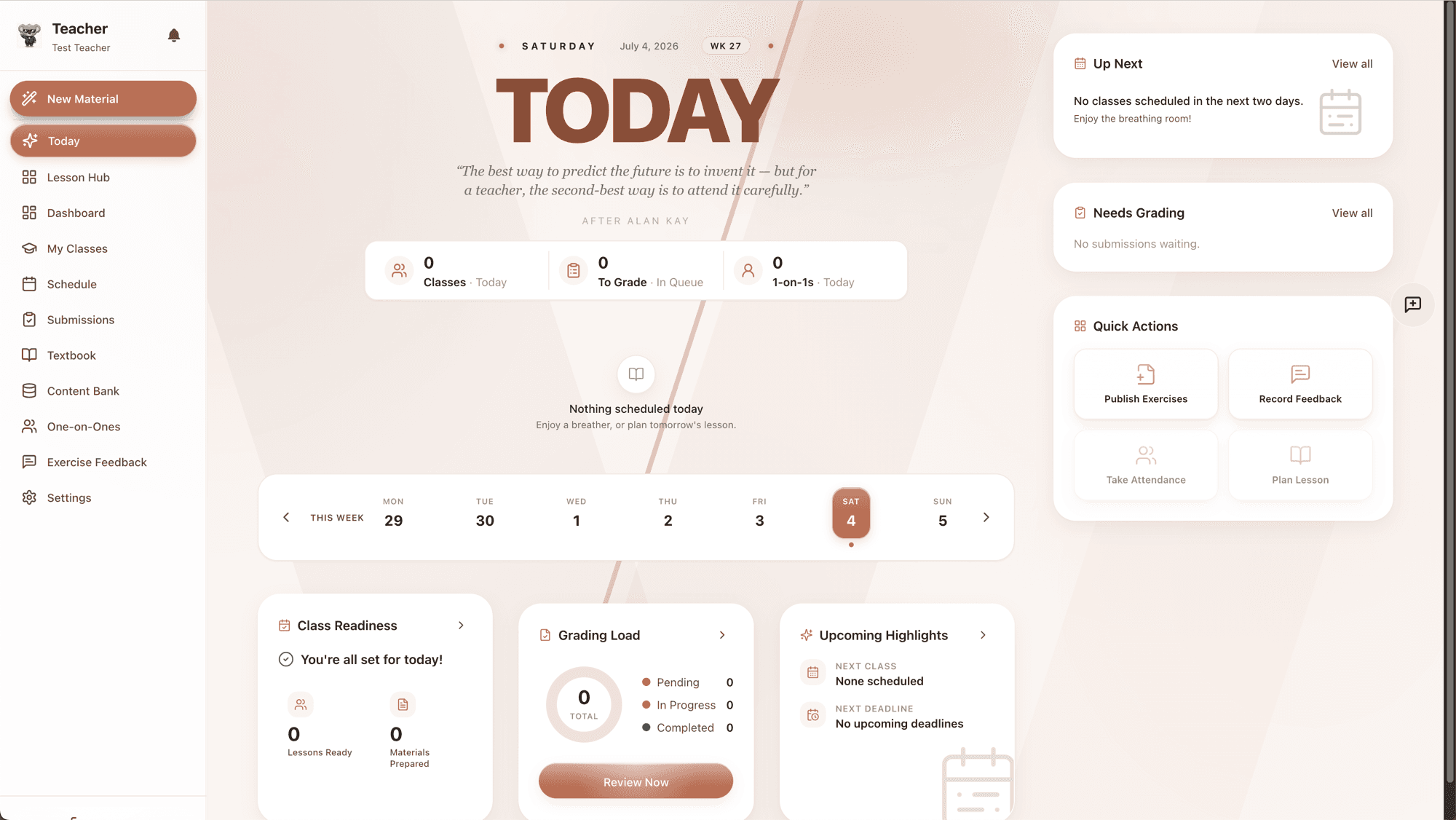
Your textbooks become a structured curriculum: vocabulary, grammar, dialogues, and reading, extracted page by page.
Students keep working between classes — fifteen exercise types, speaking practice, and flashcards on a memory schedule.
Teachers, admins, and parents each get a dashboard, built from the same record of what every student actually did.
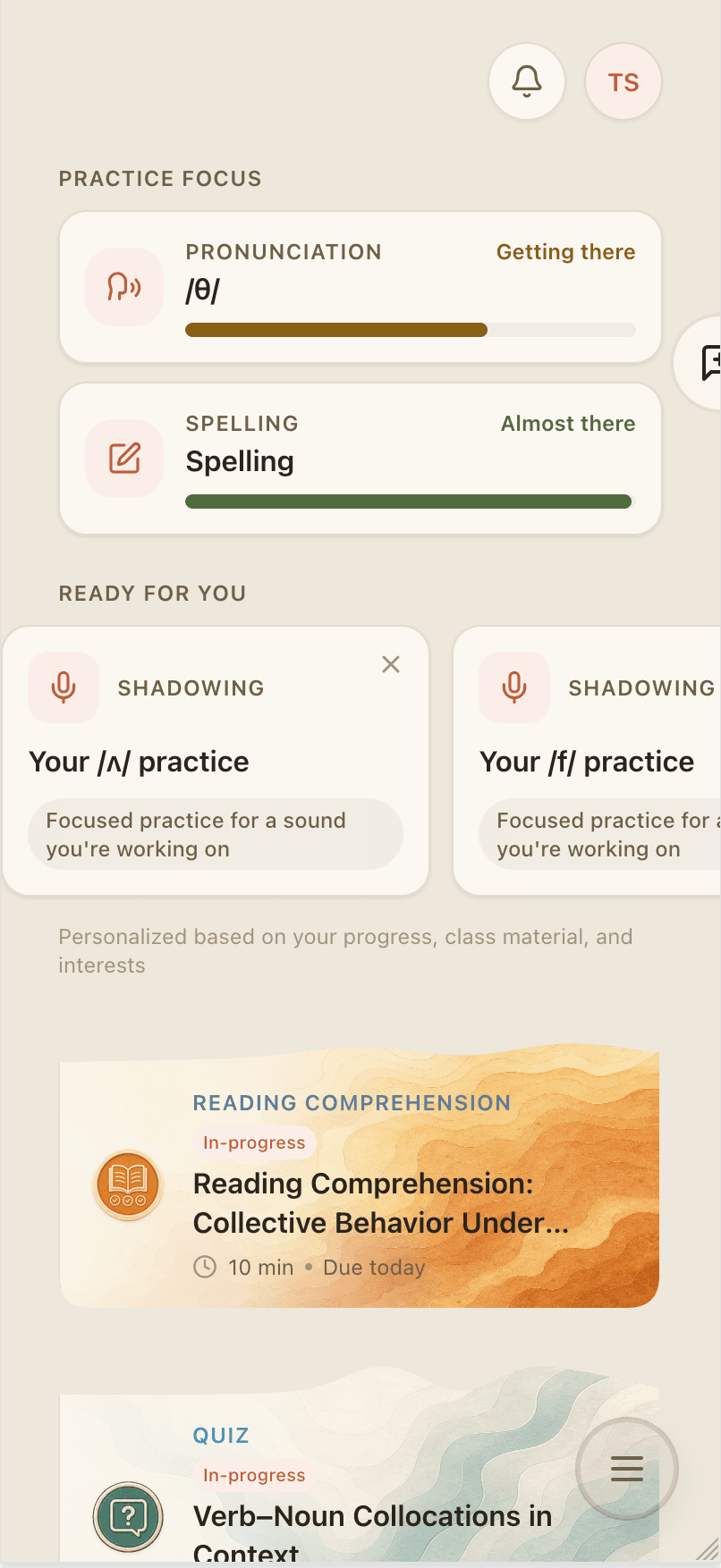
Curriculum
Upload the books you already teach from. Language Boss reads every page and extracts vocabulary, grammar, dialogues, and reading passages into a content bank. Practice generates from that bank, so what a student sees this week matches what you taught.
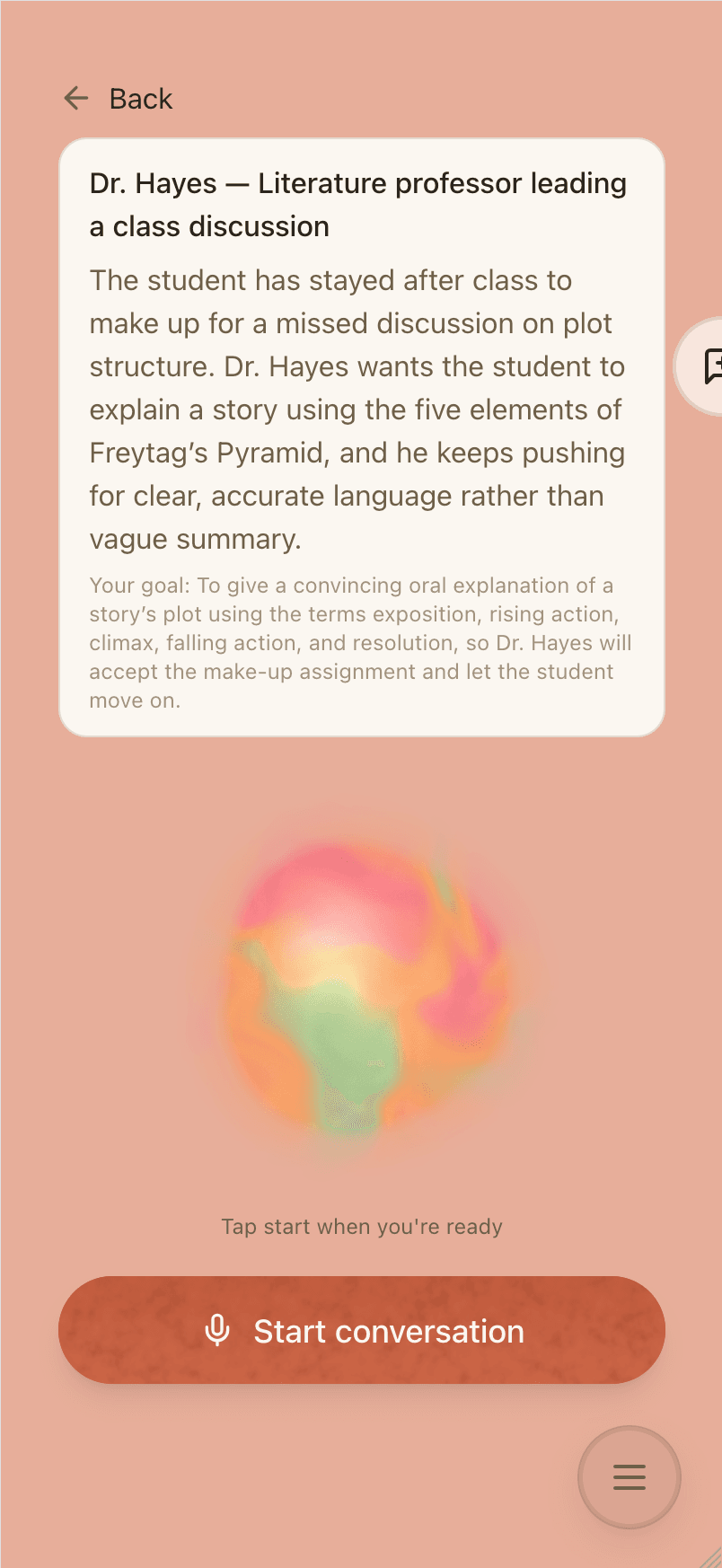
Speaking
In a class of twenty, most students speak for less than a minute. Language Boss gives every one of them a conversation partner and scores what they say sound by sound, against American, British, or Australian English.
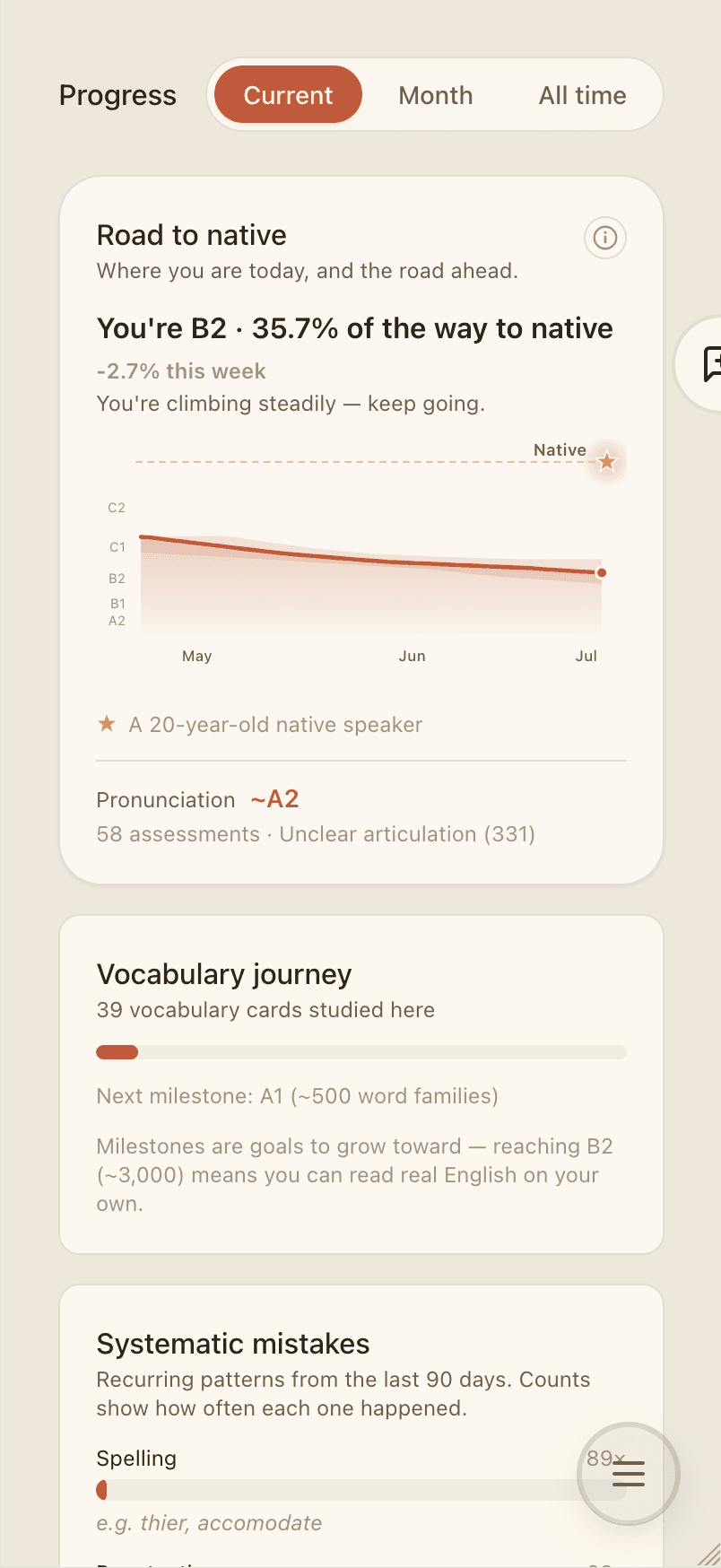
Retention
Every exercise moves a concept through four stages, from recognition to free creation. Vocabulary a student has met returns on an SM-2 spacing schedule, timed by how well they explained it rather than whether they tapped the right box.
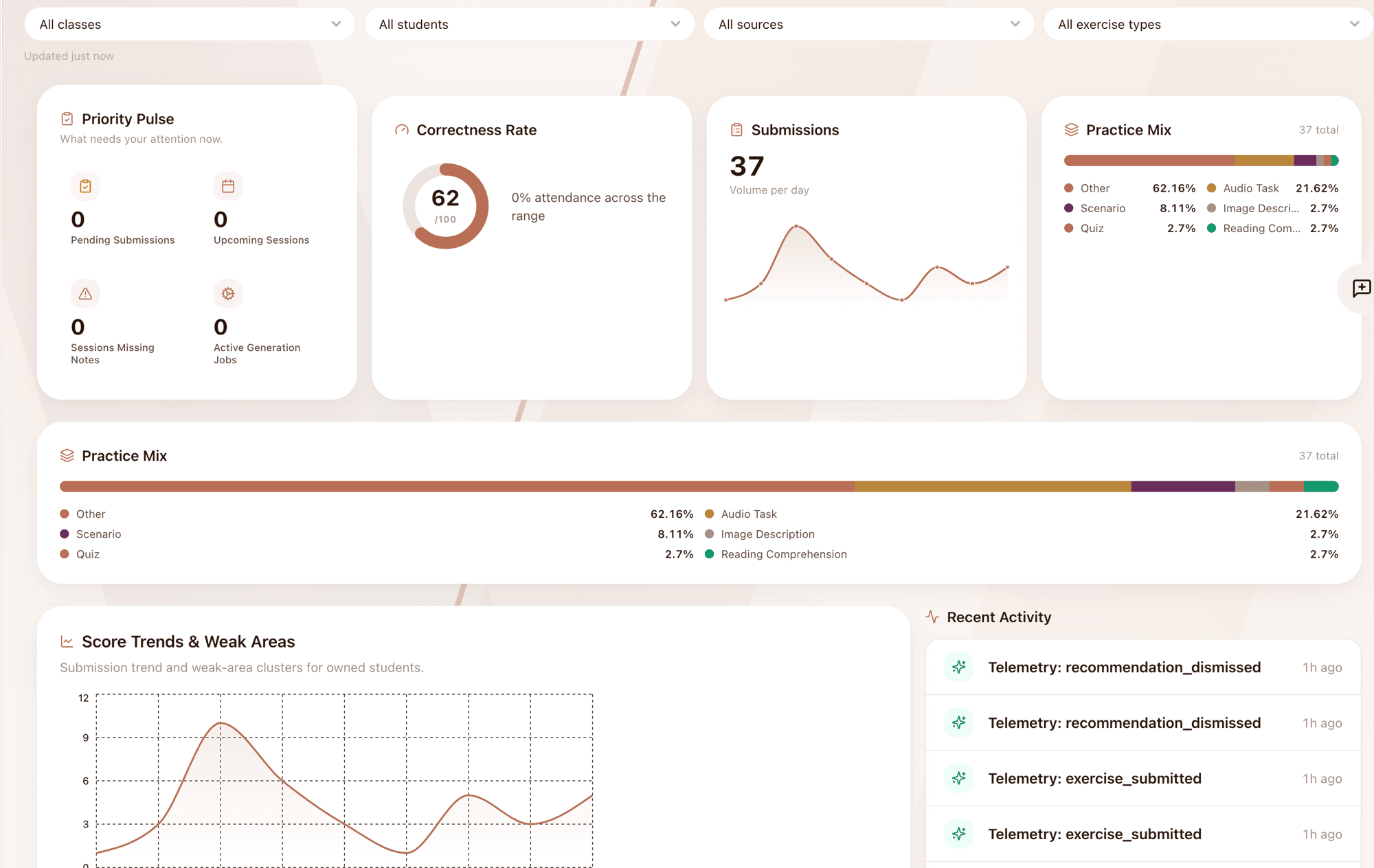
Dashboards
Attendance, submissions, correctness, practice mix, and pronunciation trends land in one place. Teachers see their classes, directors see the school, and parents get a weekly summary by LINE or email.
Practitioner skill is the strongest single factor in language learning outcomes, so every AI-generated exercise is reviewed by a teacher before a student sees it.
EEF, Rapid Evidence Assessment on language learning, 2025
Meaning-oriented practice with high involvement load, and multi-modal work that includes play, outperform isolated drilling — so exercises come from the class's own texts, and games sit alongside written practice.
EEF, 2025 — same assessment, findings 2 and 3
Review intervals follow the SM-2 spacing algorithm, graded on how well a student explained a word rather than a binary right or wrong.
P. Woźniak, SuperMemo SM-2 algorithm, 1990
Our classes are small to give individual tailored support and feedback… We structure our lessons around the highest quality resources to maximise meaning-oriented, pronunciation and, most importantly, embedded learning.
Choc Education
English learning community founded by linguists — Taipei

Multiplayer word games, connected to each student's curriculum.

LetterTree

Articulate

Spy

WordRace
A 30-minute walkthrough, tailored to your program.
One platform for running an English program. It turns your textbooks into a structured curriculum, generates practice across fifteen exercise types, assesses speaking at the phoneme level, schedules vocabulary review with SM-2 spacing, and gives teachers, admins, and parents a dashboard built from the same record.
Neither. Exercises are generated from the books you already teach from, and nothing reaches a student until a teacher has reviewed it. Teachers add instructions that steer generation and can edit anything the system produces.
English schools, cram schools, and language programs — typically with their own curriculum and their own teachers. Individual learners can't buy it directly; the platform is set up by a school, because most of it depends on your class curriculum being in the system.
The pedagogy follows the UK Education Endowment Foundation's 2025 rapid evidence assessment on language learning, a four-stage progression adapted from Bloom's taxonomy for second language acquisition, and the SM-2 spacing algorithm with AI-graded review quality.
English, Traditional Chinese, and Simplified Chinese, with LINE integration for parent communication in Taiwan and Microsoft Teams integration for scheduling.
